
Retaining wall construction in Gilroy, CA - a wall that holds your slope in place
Soil creeping onto your patio or a slope washing out every winter? We build a wall that keeps your yard where it belongs.
- Licensed and fully insured.
- Free on-site estimates.
- Replies within 1 business day.
Do you need a retaining wall in Gilroy, and what goes into building one?
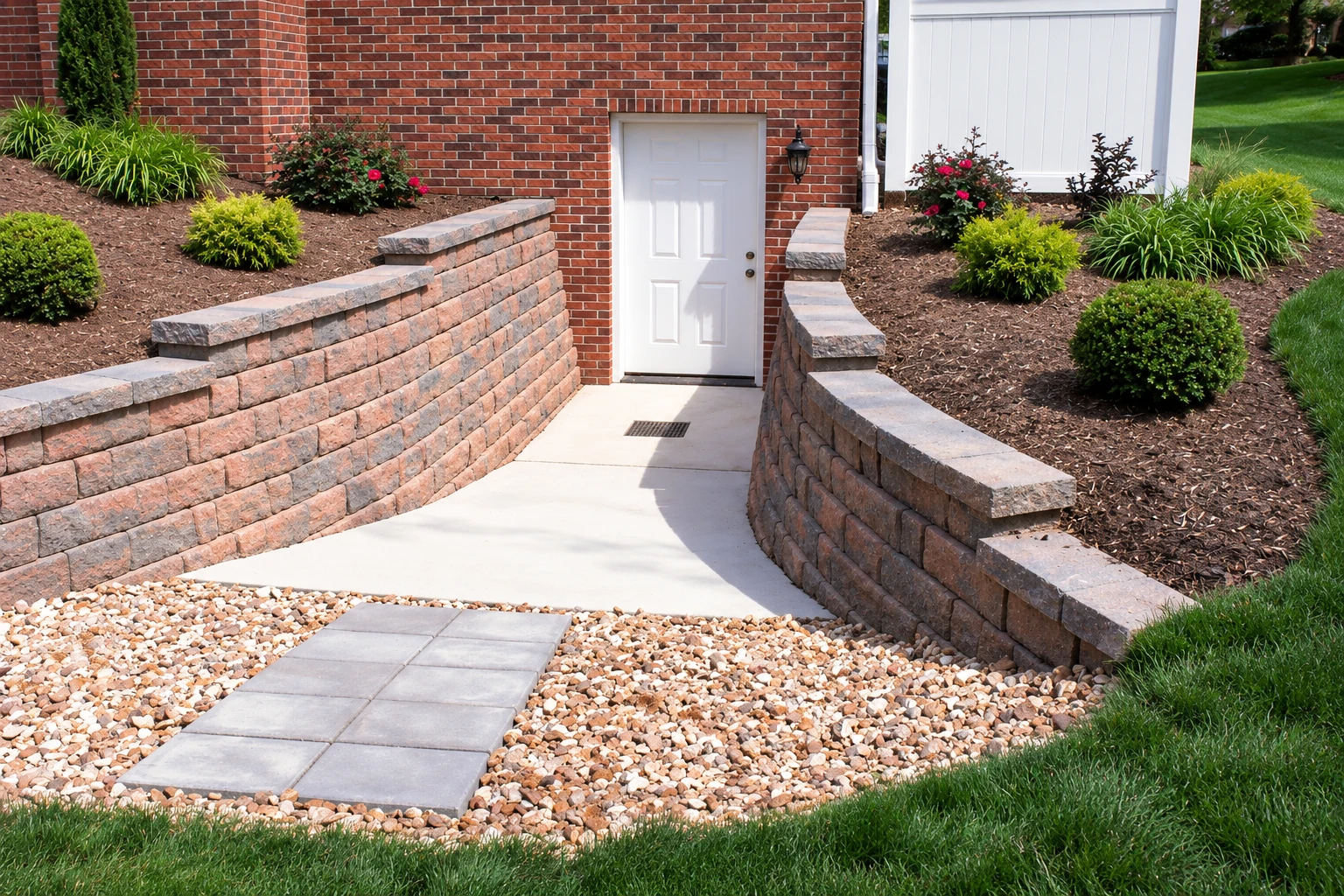
Retaining wall construction in Gilroy, CA starts with digging out the slope. Then we build the wall in poured concrete, natural stone or block set without mortar and backfill behind it, so the soil stays put and you get flat ground you can use.
Most calls I get start with a bank that slumps after rain, dirt spilling onto a patio or an old wall that's started to lean. Quality Gilroy Concrete and Masonry is based in Gilroy, and we build walls in the cities around it, from San Martin and Morgan Hill up through the South Bay and over to Hollister, Watsonville and Salinas. The price mostly turns on how long and how tall the wall is, which material you pick, how much digging and hauling the slope needs and whether an old wall has to come out first. The schedule turns on the same things, plus whether the wall needs an engineer's design or a permit before we can dig, and the written estimate I give you after seeing the job spells out what yours involves.
How do you know your yard needs a retaining wall?
Dirt washing onto your patio
If you're sweeping soil off the patio or out of the side yard after every storm, the slope is too steep to hold itself. Each winter it carries more dirt down, clogs drains and can start working under the edge of a slab.
An old wall leaning out
A lean usually means water is building up behind the wall with nowhere to go, or the wall was never built for the weight it's holding. It rarely stops on its own, and cleaning up a wall that's already fallen costs more than replacing one that's still standing.
Bulges, cracks or loose stones
A belly in a block wall, a crack running through concrete or stones shifting out of place all point to soil pushing harder than the wall can take. Small movement is the time to call, because once a section lets go it often takes the slope with it.
How we handle retaining wall construction
I start by walking the slope with you and asking how you use that part of the yard, because a wall holding back a planting bed is a different job from one holding up a driveway. Then I talk through block, stone and poured concrete with you based on your yard and your budget, and for a taller wall we plan on an engineer's design before anyone starts digging. On the build, our crew digs out the slope, packs a firm base, sets the wall course by course or forms and pours it, and backfills behind it with drainage so water runs out instead of pushing on the wall. We won't skip that drainage to save a day, because trapped water is what tips most walls over. When we're done, we haul off the extra soil and clean up.
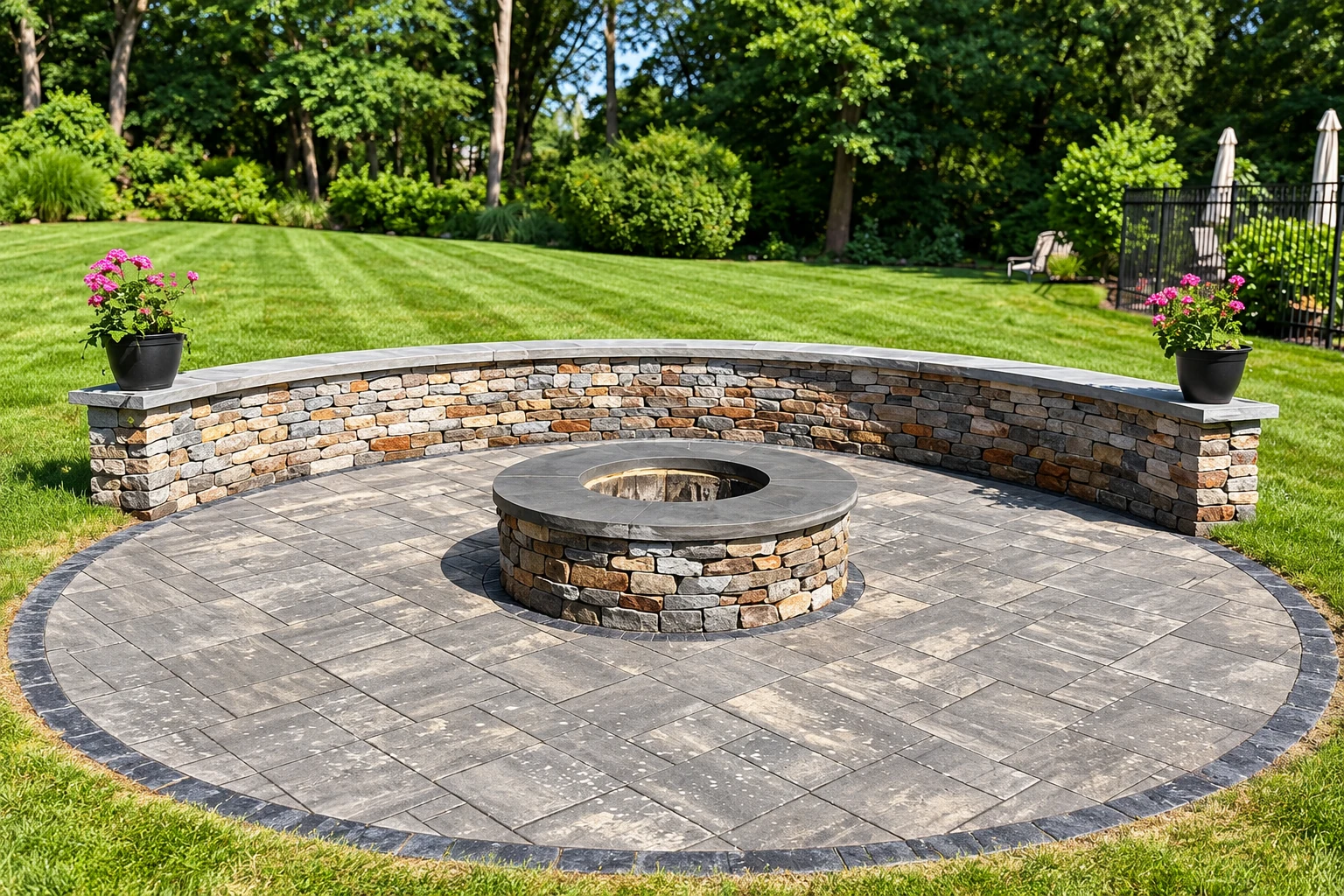
Some yards already have a wall that's worth keeping. If yours is old brick or stone that still stands but looks worn, masonry restoration may save it, and I'll tell you plainly whether it's worth repairing or should come out. Once a slope is level, a lot of homeowners want to use the new space, and the wall can become the back of a seating area with fireplace installation built in brick or stone.
Interlocking block
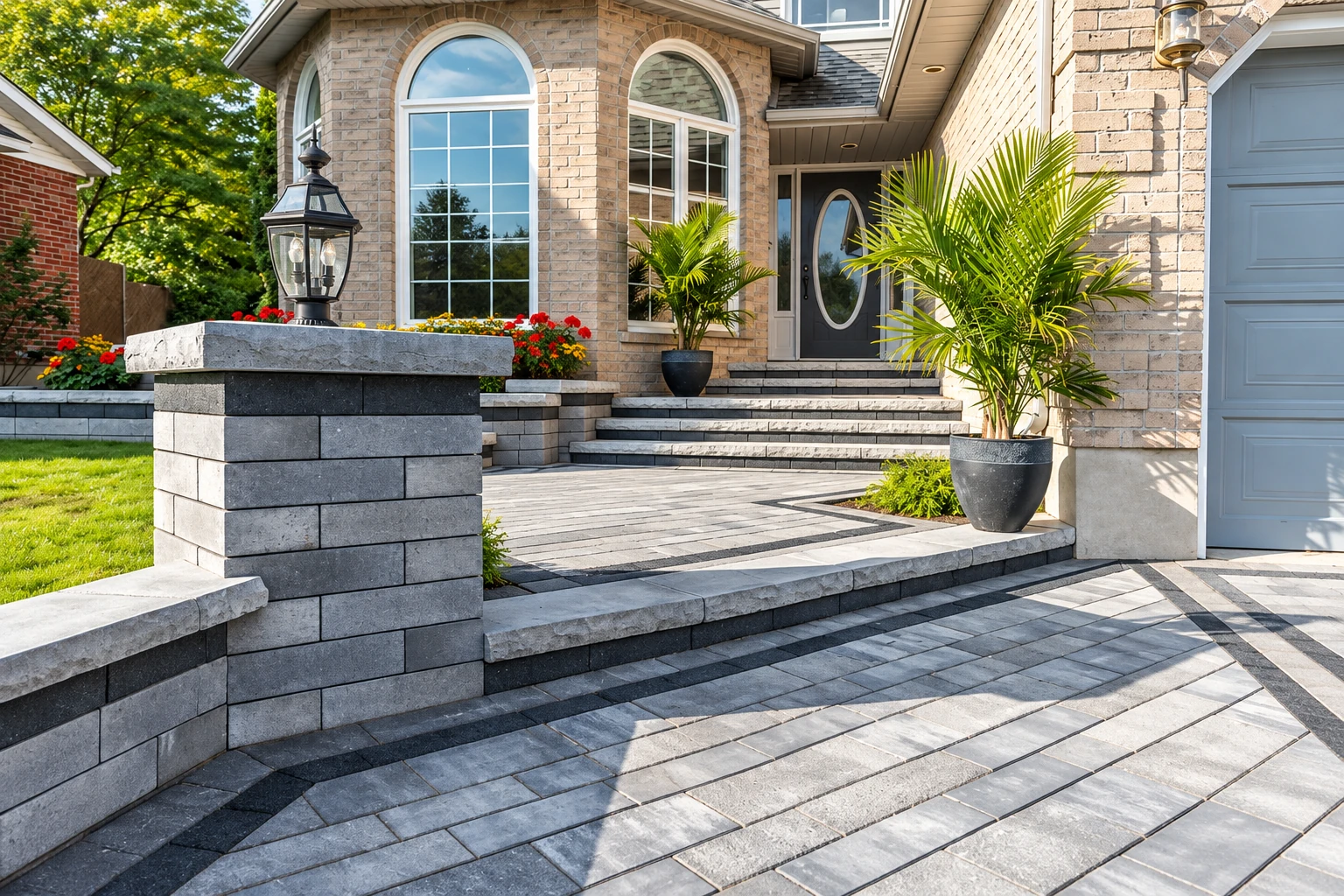
Concrete block made to stack and lock together suits most yard walls and terraces, because it gives a clean, even face at a moderate cost. It's the choice I see most for low to mid-height walls around a house.
Natural stone
Stone suits owners who want the wall to look like part of the landscape, since every piece gets picked and fit by hand. Expect it to cost more and take longer than block.
Poured concrete
A poured wall suits tight spots, walls that carry a driveway or a clean modern look. It needs forms and steel set before the pour, so there's more work up front.
Get a written estimate for your retaining wall
Send the form and we'll get back to you within one business day to set a time. I'll come out, walk the slope with you and give you a free written estimate with no obligation.
(669) 205-6449- Based in
- Gilroy, CA 95020
- Hours
- Mon–Fri: 6 AM–10 PM, Sat–Sun: 7 AM–11 PM
What happens when you call about a retaining wall in Gilroy?
Here's how a wall job runs with us, from your first call to the last look at the finished wall.
Call or send the form
Call (669) 205-6449 or send the form, and we'll set a time for me to come out. Let us know if there's an old wall on the site, since that changes what I bring and what I look at.
Walk the slope with me
I look at the job with you, explain what I see and what I'd build, and answer whatever you want to ask. You get a written estimate listing the material, the size of the wall and what's included and what isn't, so you know what you're paying for before anything starts.
Our crew builds the wall
Our lead mason runs the crew that digs, builds and backfills, and I check in while the work is going. If anything looks different once the ground is open, I tell you before we change course.
Walk the finished wall together
When the wall is done, I walk it with you and point out what to keep an eye on. That means drain outlets staying clear, plus any crack or lean that shows up after the first big rain.
Why Gilroy homeowners call Quality Gilroy Concrete and Masonry for retaining walls
I write your estimate myself
I come out, look at the slope and put the estimate in writing, and I check in on the job while our lead mason runs the crew. You're dealing with the person who answers for the work from the first visit on.
Five years of walls and repair
We've been in business since 2021, and new walls and paver work are a big part of what we do. I started out selling block and stone at a supply yard, so I know how each material behaves once it's in the ground.
Licensed and fully insured, every job
That matters when there's an open trench in your yard and pallets of heavy material moving around. Ask to see proof when I come out, and ask anyone else you're comparing for the same.
Lot location checked first
Before any design gets drawn, I look at where the wall will sit, near a creek or inside a mapped liquefaction area, because either one can change what's allowed. Finding that out early keeps you from paying for plans you can't use.
A wall is only as good as the base under it and the drainage behind it, so that's where I'll spend the most time explaining. Tell us about your slope and I'll come take a look.
Retaining walls, slopes and site rules in Gilroy
Before design starts, it's worth looking up your lot on the state's liquefaction zone map, which shows areas where the ground may lose strength in a strong earthquake. If your property sits in a state seismic hazard zone, you may be required to investigate that hazard and deal with it during the permit process, which can add design work before we dig. Whether your wall needs a permit is for the city or county to say, not us, so we check with the office that issues it and handle the application and the inspections for you.
Creeks are the other thing I ask about. Cities and counties may set buffers along creeks, and one national design manual says retaining walls aren't typically permitted inside those lines, so tell us if your yard backs up to one. We see plenty of sloped back yards and cut banks on jobs in Morgan Hill and San Martin, and the same question about where the wall can sit comes up there too.
Questions about retaining walls in Gilroy
(669) 205-6449Going by Santa Clara pricing, a poured concrete wall about 3 feet high, materials included, usually costs about $52 to $57 per square foot in the San Jose metro area. That figure leaves out tearing out an old wall, terraced walls, decorative concrete, extra height, curves and added landscaping. If you want any of those, ask for each one in your estimate, and your written estimate gives you the number for your wall.
It depends on the look you want and how fast you want it built. One landscape company's comparison calls poured concrete the most labor-intensive wall to put up, while mortarless block goes up faster and more evenly. With natural stone, the result leans heavily on the skill of the mason doing the work.
One block maker's manual says any wall over 4 feet tall, or whatever your local code requires, should be designed by a licensed professional engineer. A bigger wall may also call for other experts to look at water, soil, settling, earthquakes and whether the whole slope could slide.
A national design manual says an experienced crew of three or four typically builds 300 to 500 square feet of wall a day. You can use your wall's size to judge the building stage, and any design, permit or utility marking time comes on top of that.
Call 8-1-1, the Call Before You Dig line every state has, and they'll mark underground utilities a few days before digging. Leave room in the schedule for that, and expect the crew to dig carefully around the marked lines.
The contractor should plan deliveries and storage so the work area stays open, and it's fair to bring this up when you get the estimate. I'll show you where I'd want the pallets and gravel so you can still get in and out of your driveway.
Other masonry work that goes with a new wall
Masonry restoration
Have an old stone or brick wall that still stands but looks worn? Restoration can repair joints and faces so you keep the wall you already have.
Fireplace installation
A level terrace behind a new wall makes room to gather, and a fireplace in brick or stone lets you keep using that space after dark.
Where we build retaining walls around Gilroy
Quality Gilroy Concrete and Masonry is based in Gilroy, California, and works in the cities around it. The 12 cities below have their own page, including Hollister and Watsonville, so pick yours to see what we run into on jobs there.
Gilroy, CA
Get your retaining wall estimate started
Call (669) 205-6449 or send the form with the wall's rough length and height, a few photos of the slope and a note if a creek runs nearby, so I come out already knowing what to look for.